

How To Get System Configuration In Windows Xp
View system configuration in Windows XP
Here's how to have a look at your system's settings.-
Choose Start→Run to open up the Run dialog box. Type msconfig in the Open text box and click OK.
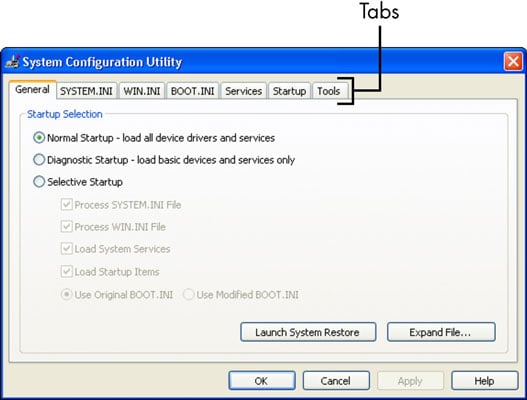
The Organization Configuration Utility dialog box appears, displaying vii tabs. Each tab contains settings for various elements of your PC.
-
Click the Services tab.
You see a long list of the current software services running in Windows.
-
Click the Startup tab.
This tab lists the programs that launch every time you first your machine.
-
Click the Tools tab.
It lists the software tools you can use to inspect or troubleshoot your system. (Interestingly, Microsoft's help-desk technicians may utilize the same tools to help you lot uncover and repair a problem with your computer.)
-
When you're ready to become on with other computer tasks, click the OK push.
The Arrangement Configuration Utility dialog box closes.
Select diagnostic startup in Windows XP
It certainly is interesting to poke around inside the Organization Configuration Utility, only you also can use information technology as a serious diagnostic tool.
-
Choose Start→Run to open the Run dialog box, blazon msconfig in the Open up text box, and click OK.
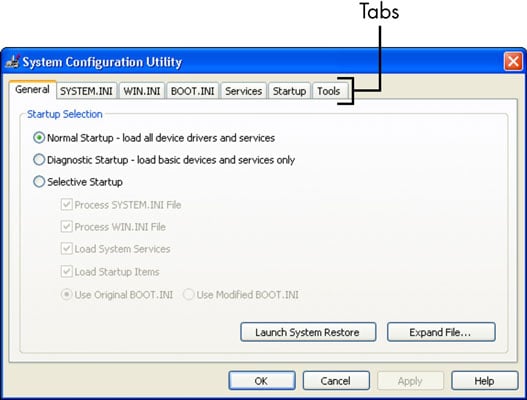
The System Configuration Utility dialog box appears.
-
On the General tab, select Diagnostic Startup and click OK.
The utility takes a few seconds to disable all but the most essential startup programs and services.
-
When the Restart/Go out prompt appears, click Restart. When the diagnostics notification appears, click OK.
Windows displays the System Configuration Utility dialog box once more.
-
Click the Startup tab, scan the list for a program that's a likely troublemaker, and bank check its cheque box.
You recognize a troublemaker through a process of elimination and adept guessing. Clarify the problem that y'all're experiencing and attempt to notice an application that may have something to practice with information technology. Start with anything that isn't a Microsoft product and, therefore, may exist incompatible with Windows.
-
Click OK to restart your computer in Selective Startup manner. If the problem recurs, proceed to the next step. If the trouble doesn't occur, repeat the steps until you lot locate the offending application.
Reinstall the problem program or contact the software manufacturer for help.
-
Return your system to normal startup. To do so, choose Beginning→Run to open the Run dialog box. Type msconfig in the Open text box and click OK.
The Organisation Configuration Utility dialog box opens.
-
On the Full general tab, select Normal Startup and click OK.
Your figurer restarts with all its programs enabled.
View system configuration in Vista and Windows seven
Viewing the arrangement configuration in Vista and Windows 7 is unlike than in Windows XP:
-
Click the Kickoff button then click inside the Search Programs and Files field (Start Search in Vista) at the lesser of the screen.
The msconfig program appears at the summit of the search box.
-
Click msconfig to display the Arrangement Configuration dialog box.
Vista displays a UserAccount Control notice.
-
Investigate the Services, Startup, and Tools tabs.
These tabs are essentially the same as those in the System Configuration Utility dialog box in Windows XP. Missing from the Organization Configuration dialog box, even so, are the .INI tabs from Windows XP — which is probably a expert thing, because you shouldn't change those settings anyway.
-
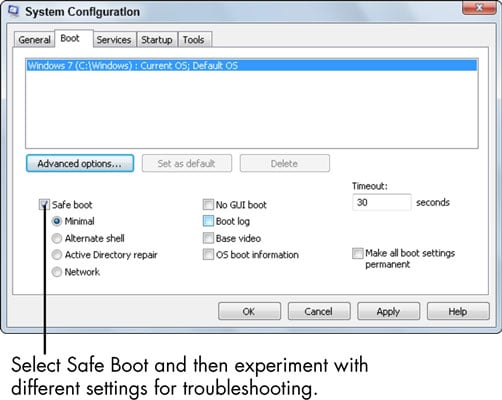
Click the Boot tab.
The System Configuration dialog box appears.
-
Click the General tab, choose Diagnostic Startup, and click OK to test your system with minimal applications loaded. When finished, select Normal Startup on the General tab and click OK.
You return to normal startup way, and your computer restarts with all its applications enabled.
Almost This Article
This article can exist plant in the category:
- Basic Skills ,
Source: https://www.dummies.com/article/technology/computers/basic-skills/for-seniors-how-to-check-and-change-your-computer-systems-configuration-191688/
Posted by: klausalearright.blogspot.com
0 Response to "How To Get System Configuration In Windows Xp"
Post a Comment