

The Power of Open Ecosystems - Open Your Doors And People Will Come - klausalearright
One question has bothered many of United States of America for a years: Why do some companies shuffling billions and some flunk miserably?
The market has changed. 20 years ago, brands were pushing customers into buying their products. They sent stunned direct mail, made cold (and quite bothersome) sales calls and, basically, did everything in their power to "military group" you to turn a customer. Back then, people had no unusual choice. Everybody was doing information technology. Because IT used to work. Used to.
The market has evolved
I don't want to throw around buzzwords like "Web 2.0" or "Web 3.0" (whatsoever this power be). Same thing I screw for certain is that the market has developed further than 1.0.
Today, brands are no more pushing you. Or else, brands do everything to make you desire to become a customer (pulling instead of pushing).
Look at what's on right now: Brands have communities. Brands birth loyal fans. And, most of all, brands have platforms and whole ecosystems.
Entertain three big applied science companies. Chances are that you thought of companies like Google, Apple and Facebook. Now what do they all accept in rough-cut? All of them stimulate an open ecosystem. What I tight is that all of the higher up mentioned companies let agape their doors to third parties, allowing them to create products and/or services around the weapons platform.
Why and how Facebook succeeded
Let's have a quick look at how Facebook has grown over the last 9 days. Along the graph below you can figure that Facebook did something that led to an explosive growth of the number of users.
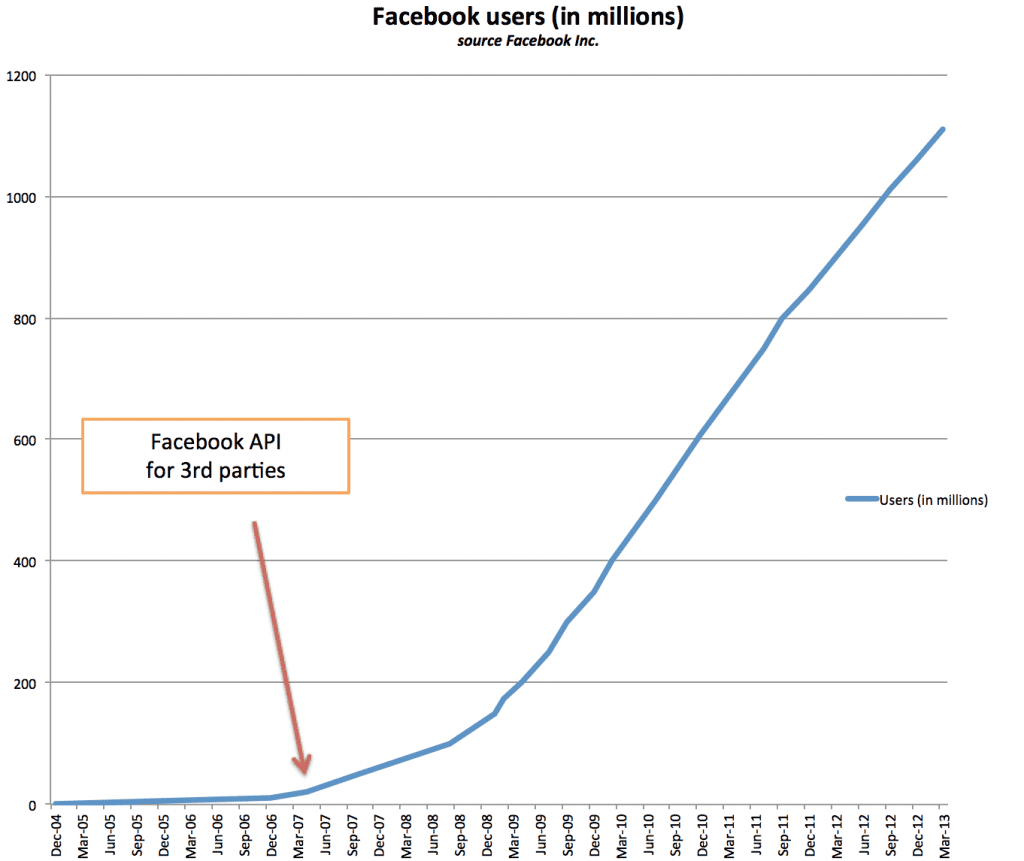
In May 2007, Facebook has introduced "Facebook Platform", an API which allows other companies to use Facebook's information and build services around it. This changed everything. Suddenly, other companies started to arise whose main rootage of income was Facebook. Zynga (the maker of FarmVille) was founded in July 2007, just two months after the introduction of the new Facebook API. Coincidence? Definitely not.
What Facebook did was in all probability the smartest draw in its history. They birth helped another companies to benefit from Facebook's platform, which led to a huge increase of Facebook users. It's a win-win situation for everybody.
Others can do information technology too
Now let's take Malus pumila (always a exemplar). Orchard apple tree increased its iPhone sales from 717.000 in Q3 2008 to 6.890.000 in Q4 2008. That's a 861% increase. Merely how did they execute it? Some of you might say that the conclude for this was the unveiling of the iPhone 3G in June 2008, which shipped with iPhone OS 2.0 (now iOS).
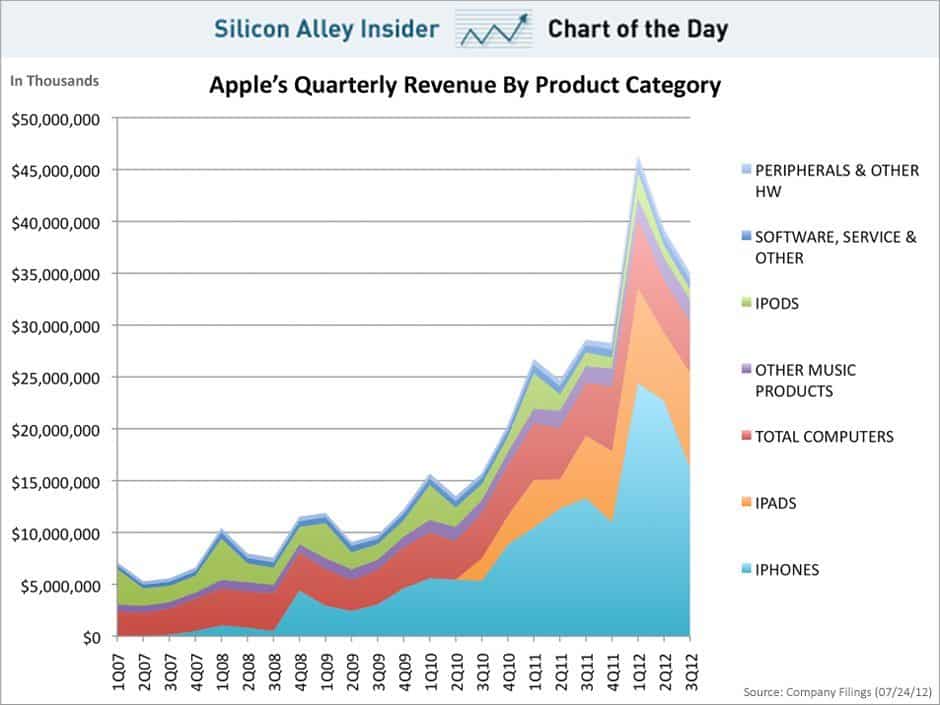
The chief reason for such a rapid addition in iPhone gross sales was the probably nearly important feature of the new iPhone Oculus sinister: the legendary App Store. Much like Facebook, Orchard apple tree has allowed developers to make money from the new platform.
Many different companies, including Google, take up done the right like thing. They experience opened equal to others. Just believe of iTunes, App Store, Playing period Store and various third-company products and services built about the two big brands.
How an acceptant brand ecosystem solves the chicken-and-egg trouble
Would you buy out a tablet operative an OS with a poor app selection? No. Would developers adorn in creating apps for this OS if they would get solely a small share of app sales? No, they wouldn't. And now you have the problem: No apps, nobelium users. No users, no developers. So what should companies do to attract both parties?
The secret to solving the chicken-and-egg problem is to subsidise one political party and charge the former more. Satisfy i and the other will come.
Both Apple and Google are very attractive for developers. Both get a 30% share of Play Store & App Storage gross sales, departure developers a solid 70%.
Let's think one step further. Forthwith that we suffer satisfied nonpareil party, the other comes. Developers create awesome apps which people love to use. Hence, much mass stock. And the more people buy up in, the larger the app market gets. This makes it more attractive for even more developers. And with even Sir Thomas More developers more users will play along.
By allowing one party to profit from your platform, brands not only draw i more of the different, but also create a soul-sustained market inside their ecosystem.
Each of the above sounds pretty sound. But, perhaps, the most exciting thing is that open ecosystems have all but 0 financial risk. If a third-party religious service/ware fails, the ecosystem doesn't get affected at all. Basically, companies can charge 30% of sales without taking almost any risks.
Closed ecosystems will fail
There are still some companies, which get into't cover the "red-hot way" of doing business. They continue closed.
BlackBerry (RIM) is a perfect example. They longed-for to have every divorced part of its platform. Own devices, own apps, own everything. And this is what happened:
In June 2007 BB's price per share was at around $240. You be intimate what it's today? $7.88. The stock price went up (for a bit) in January 2013 to $17.61 when BlackBerry showed off its "whopping"70.000 third-party apps. At this place in time both iOS and Android had much 750.000 apps in their stores. Each.
As you can understand, open ecosystems work and stoppered ones, well, they don't.
What will happen to Twitter?
In June 2013 Twitter has announced epic changes to its API. With the release of API v1.1 developers forthwith have less freedom than earlier. The guidelines got practically stricter and Twitter wants to control the number of users some given Chitter app can possess.
This move put many Chirrup clients and apps out of business. Why did all of this happen? Because Twitter wants to own more of its ecosystem and push its own client apps. Clock leave show whether this has been a smart move in the long haul.
Determination
Open stigmatise ecosystems are tested to work. Just bet at the biggest engineering science companies extinct there and what they do. The ones that don't ingenuous up to third-parties are likely to fail. At that place are right many benefits of opening up than disadvantages. Be greedy and lose everything. Share your success and net income from it.
Concealment image by Justinc. Article divine by Marshall Avant-garde Alstyne.
Source: https://trendblog.net/open-ecosystems-work/
Posted by: klausalearright.blogspot.com
0 Response to "The Power of Open Ecosystems - Open Your Doors And People Will Come - klausalearright"
Post a Comment